Theoretical Probability Of Winning Craps
- Theoretical Probability Of Winning Craps Odds
- Theoretical Probability Of Winning Craps Rules
- Theoretical Probability Of Winning Craps Games
- Theoretical Probability Of Winning Craps Against
ANATOMY OF A BANKROLL MURDER: HOW IT HAPPENS
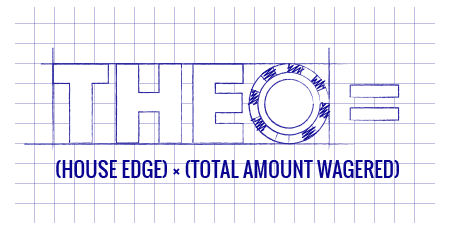
There may be technical problems with getting accurate values for these numbers, but at its core, the formula for theo is simple: The theoretical win for players who play Casino War is (0.0290) × (total amount wagered). The theoretical win from players who place a wager on the pass line in craps is (0.0141) × (total amount wagered).
- You can use probability to figure out the odds of winning and losing in the popular casino dice game of craps. In the game of craps, on your first roll (called the come out roll), three outcomes are possible: Natural: Rolling a total of 7 or 11 — automatically wins. Craps: Rolling a total of 2, 3, or 12 — automatically loses.
- The logic is that if my pass line loses, I still win $7 from the Any Craps win. This looks good on paper, because I only lose $3 instead of $10 thanks to the Any Craps hedge. Furthermore, I only lose $1 if any number other than 2, 3, or 12 are tossed.
- Statistically, in a particular session the mathematical odds reinforce the odds of losing are slightly greater than the odds of winning. The odds of breaking even are about 0.67%. For a truly big picture perspective on the odds of playing craps, probabilities calculated from simulating 1,000,000 sessions of 100 come out rolls each leave a.
In Part 1, I explained why the theoretical becomes reality and why you can’t avoid the theoretical house edge. Let’s now look at how the typical loss happens and then add the element of tilt to our play. Note: if you only want to see the final numbers, look to the bold text. I included the explanations so that you may double check and critique my math, if you are so inclined.
Tilt: what is it?
First, let’s discuss this issue of tilt. It’s broader than you may think.
Tilt is simply any stimulus that causes a gambler to deviate from his normal play. It’s really that simple and broad. While most people associate tilt with loser’s tilt – where a gambler chases after his loses by increasing his bets or making more bets – there are many forms of tilt.
All the forms of tilt also have a similar element in common: they compel the player to bet more, exposing more of his bankroll to the house edge. Here are some forms of tilt.
Winner’s tilt
Winner’s tilt is when the high and rush of winning compels the bettor to bet more. Winner’s tilt has the same effect as loser’s tilt in that the player will bet more because he is winning. Winner’s tilt also has the added danger of causing the player to start wasting his bankroll away from the table. Tilt doesn’t always just end when the player leaves the table.
FOMO tilt
There is what I call FOMO tilt, meaning the Fear Of Missing Out, where the bettor starts making bets because he is afraid of missing out on a win. The player normally would not make these bets, but since he’s already been making the bet, he must continue making the bet. He is afraid that once he stops, it might just hit. He has a fear of missing out.
Frustration Tilt
Our player is place betting the inside numbers and the outside numbers are hitting. Joe Gambler then switches to the outside numbers, and the inside numbers start hitting. Out of frustration, he now bets across, which is something he usually does not do.
It’s not wining or losing that’s setting off the gambler, it’s frustration.
Alcohol Induced Tilt
Alcohol should have its’ own tilt category, due to its’ availability in a casino. When players become drunk and start betting more, they not betting more because they’re happy, sad, frustrated, winning, or losing; rather, they’re just betting more because they’re drunk and have a false sense of bravado for no good reason.
The result is the same: player bets more or differently than they would have bet if they had not been drunk.
All forms of tilt do one very dangerous thing: expose more of the bankroll to the house edge.
Tilt acts as amplifier to the house edge. Tilt is an accomplice to the bankroll murder. That’s why in this anatomy of a murder, it’s not proper to solely blame tilt. If the player were to play a positive expectation game, and he started doubling his bet because of loser’s tilt, it would mean that the player would have double the expected gain per bet (assuming the player did not make adverse decisions that reduced his expectation).
It’s not difficult to imagine a craps game – or any casino game – with a positive expectation: just look at the game from the casino’s perspective. The casino is effectively playing craps with a positive expectation. The casino owner might get drunk, make a rash decision and triple his maximum limits. Oh no, the poor casino owner is going to have his clocked cleaned by the martingale bettors. Yea, not really.
Tilt is not a problem until the negative expectation from the house edge is added to the equation.
Let me show you how the house edge and tilt work by breaking down the cost inflicted by the house hedge, and then show you the cost when various levels of tilt is added. Have you ever wondered, ‘what is this hardways bet costing me’?
The House Edge, In Action
Let’s break down the amount of the loss attributable to the house edge.
Let’s say that Gambler Joe likes to play craps, and he is going on vacation. Joe takes a $2o00 bankroll with him. His plan is to play for 4 hours per day, and his vacation is for 5 days in beautiful Las Vegas. In effect, he will play a total of 20 hours of craps during his vacation.
Assuming at the average craps table there will be 100 rolls per hour (note that the Hard Rock Real Craps game, which lasts approximately one hour, has 110 rolls https://youtu.be/7KL8H91s28I). This means that Joe will play about 2000 rolls.
Let’s breakdown his play, and see what it should theoretically cost Joe to play craps on his vacation.
Without tilt and sticking to his normal play
This is how Joe likes to play. Based on my observations at the table, this is a common way for many players to play. So that Joe has a reasonable chance of not being broke in the middle of his vacation, he will bring a $2000 bankroll…
- $10 pass line + $20 odds
- $5 on the hard ways 6 and 8
- $5 craps on the come out
- Place bet of $12 on the 6 and 8
Let’s now do the math on his expected loss per bet over the course of his trip. You can just look to the bold print for the final figure of each bet.
- $10 pass line + $20 odds
- House edge of 1.41% on the pass line, and considering the average number of rolls per pass line bet, the house edge per roll is .42% (citation, Wizard of Odds). We will ignore the odds bet, since there is no house edge. On an expected loss per roll, the expected loss per roll can be broken down into 4.2 cents per roll.
- The average number of rolls for a pass line bet to settle is 3.38 (citation, Wizard of Odds).
- At 100 rolls per hour, his expected loss per hour from pass line betting is $4.20.
- $5 each on the hard ways 6 and 8
- House edge of 9.09%, which is 2.78% per roll, considering it takes on average 3.27 rolls to settle the bet (citation, Wizard of Odds). This works out to an expected loss of 13.9 cents per roll, per number.
- The average number of rolls for a hard ways bet to settle is 3.27 (citation, Wizard of Odds).
- At 100 rolls an hour, his expected loss per hour from betting both the hard ways 6 and 8 is $27.80 ($13.90 per number).
- Note that Joe could reduce his expected hourly losses by turning the hard ways off on the come out.
- $5 Any Craps on the come out
- One roll bet, so the house edge is 11.11% per bet and per roll.
- Since this bet is on the come out only, assuming a new pass line bet every 3.38 rolls, this bet will be made around 29 times in an hour. His expected loss per Any Craps bet is 55.55 cents per roll.
- At 29 Any Craps bets per hour, his expected loss per hour from betting the Any Craps is $16.10
- $12 each on the Place bet of 6 and 8
- House edge is 1.51%, which is .46% per roll, considering the average number of rolls to settle the bet. Thus the expected loss per roll is 5.5 cents per roll, per number.
- The average number of rolls for a Place bet to settle is 3.27 (citation, Wizard of Odds).
- At 100 rolls an hour, his expected loss per hour from betting both the Place 6 and 8 is $11.04 ($5.50 per number).
Expected loss with normal play
Gambler Joe is going to play over 20 hours. This is his expected loss over the vacation for each bet.
- $10 pass line + $20 odds
- Expected loss over the vacation is $84.
- $5 each on the hard ways 6 and 8
- Expected loss over the vacation is $560.
- Note: Now do you understand why the casino allows a $1 or $5 hard ways when the table minimum is $10+?
- Expected loss over the vacation is $560.
- $5 Any Craps on the come out
- Expected loss over the vacation is $322.
- $12 each on the Place bet of 6 and 8
- Expected loss over the vacation is $220.
So the grand total of all his gambling over 5 days is that itcosts Gambler Joe a theoretical $1,186.
If Gambler Joe’s were to cut out the hard ways and the prop betting, his gambling vacation would be relatively cheap at $304.
Even if Joe were to stick to his betting because he loves the hard ways, one could argue that $1,186 as the cost of gambling over a 5-day vacation is not that bad.
So let’s add tilt into Joe’s gambling; not a lot of tilt, just a little.
With mild tilt
While Joe has put a dent into his bankroll, he hasn’t lost his entire bankroll.
This is now the story of how Joe loses his entire bankroll, propping him to consider quitting.
Joe has a bad session or a bad day, and now, he increases his bets.
Joe is not going to play on tilt all of the time. Let’s say that he only goes on tilt, 1/3 of the time (rounded up to 34%). Let’s take his exact play from above, and start increasing his bets because he tilts. Assume 100 rolls per hour, and on 66 of those rolls, he plays his usual game (his ‘normal’ rolls), but he adds to his bet, hoping to chase his losses and bets more (’tilt’ rolls). It doesn’t matter when he presses the bets, because the effect is the same whether he presses in intervals, all at the end, or in the middle of the game.
- $10 pass line + $20 odds
- Tilt causes Joe to increase his pass line bet to $25 because he is at a table that allows a max of 3x, 4x, 5x. He cannot increase his odds without increasing his pass line bet.
- 100 total rolls an hour, of which 66 are normal play, and 34 are on tilt play.
- At 66 normal rolls, expected loss per hour is $2.77
- At 34 tilt rolls, expected loss per hour is $3.57
- At 100 rolls per hour, Joe’s expected loss per hour from pass line betting with tilt is $6.34.
- $5 each on the hard ways 6 and 8
- Joe starts losing or is dazzled by the hard ways constantly rolling in front of him, so he presses or parlays his bets. ‘Parlay’ is when Joe combines the present winnings with the prior bet for the next bet. For example, if a hard 6 rolls and the bet is $5, the payoff is $45; if the player parlays, the hard 6 now has a $50 bet.
- The probability of the hard ways 6 and 8 hitting is 1 in 11 (9.09%), so let’s assume that with 100 rolls an hour, he will hit 9 each of the hard 6 and hard 8. When he hits, he parlays because he can’t stand to miss the possibility of the parlay hitting.
- At 91 normal rolls per hard number, Joe’s expected loss per hour is $25.30 for both the hard 6 and hard 8.
- At 9 tilt/parlay rolls per hard number, Joe’s expected loss per hour is $25.02 for both the hard 6 and hard 8.
- At 100 rolls an hour with tilt, Joe’s expected loss per hour from betting both the hard ways 6 and 8 is $50.32 ($25.16 per number).
- $5 Any Craps on the come out
- Most players who bet the Any Craps on the come out do so to ‘protect’ their pass line bet. In this case, since Joe is pass betting $25 when he is on tilt, let’s just assume that Joe does not increase his Any Craps at all. The payoff of 7-1 is enough to protect his $25 pass.
- At 29 Any Craps bets per hour, Joe’s expected loss per hour from betting the Any Craps is $16.10.
- $12 each on the Place bet of 6 and 8
- Increases on the Place 6 and 8 are likely candidates for increasing bets due to tilt.
- Let’s assume that Joe increases his bets on the place 6 and place 8 to $24 when he goes on tilt, hoping to chase his losses. Each place bet has a probability of winning 46% of the time, so on his losses, which happen 54% of the time, Joe will increase his bet to $24. But let’s not assume that Joe tilts after every loss. Instead, let’s say he only tilts 1/3 of the time when his place bets lose. Thus, only tilting on 18 of his 100 place bet rolls.
- At 82 normal bets per hour, his expected loss per hour is $9.05 for both the place 6 and place 8 bets.
- At 18 tilted rolls per hour, his expected loss per hour is $3.97 for both the place 6 and place 8 bets.
- At 100 rolls an hour, Joe’s expected loss per hour from tilt betting both the Place 6 and 8 is $13.02.
Joes expected loss over his vacation, while playing on on tilt roughly 1/3 of the time, is $1,715.
Even on mild tilt – not steaming raging tilt – Joe has lost almost all of his bankroll.
Press it!
You’ve probably seen the RoadGambler videos, and if you read the comments, one of the most common bits of advice from commenters is to press your bets if they hit.
So let’s see what happens when the bets are pressed.
Note that the reader might think that it’s not proper to account for losses from parlay or presses because that was ‘house’ money. It is not proper to exclude the increases in bets because the money at that point belongs to Joe. Whether the wager comes from the winnings or from the Joe’s own pocket, it makes no difference to the overall calculation.
When making bets, the dice and the laws of probability – and consequently the house edge – do not care if the player used their own money to bet or the casino’s money to make the bet. It’s all the same and does not matter.
Expected losses using the press technique
- $10 pass line + $20 odds
- Player’s usually do not advocate for pressing the pass line bet, so this will remain the same.
- At 100 rolls per hour, Joe’s expected loss per hour from pass line betting is $4.20.
- $5 each on the hard ways 6 and 8
- This is a common candidate for pressing. Let’s say Joe is a jackpot player and likes to parlay. So his first bet is $5, when he hits he will parlay to $50, hoping to win $500 from his original $5 wager.
- If the player plays 100 rolls an hour, and his hard ways are always on, then he will win a 1 and out of 11 attempts on the hard 6 or hard 8 (ten ways to lose, one way to win). This means that 9 of his 100 rolls will have the pressed amount.
- At 91 rolls per hard number, not pressed, Joe’s expected loss per hour is $25.30 for both the hard 6 and hard 8.
- At 9 rolls per hard number that have parlayed bets, Joe’s expected loss per hour is $25.02 for both the hard 6 and hard 8.
- At 100 rolls an hour with parlayed bets, Joe’s expected loss per hour from betting both the hard ways 6 and 8 is $50.32 ($25.16 per number).
- $5 Any Craps on the come out
- Most players do not press the Any Craps, so we will not add a press to this bet.
- At 29 Any Craps bets per hour, Joe’s expected loss per hour from betting the Any Craps is $16.10
- $12 each on the Place bet of 6 and 8
- This is the bet most likely to be pressed, and players will routinely press this bet three or four times or more. For purposes of this calculation, let’s press the bet three times.
- 100 total rolls, the player will win 46% of his rolls roughly, and of that 46% will win, and 46% of that.
- Out of 100 total rolls involving a place bet of 6 and 8, the following is the approximate number of rolls for each press
- 54 rolls, on average, involve bets that are never pressed and stay at $12
- expected loss per hour for both numbers is $5.96
- 25 rolls, on average, involve bets that are pressed only once (lose before the second press occurs) and thus are pressed to $24
- expected loss per hour for both numbers at this press level is $5.52
- 11 rolls, on average, involve bets that are pressed twice (lose before the third press) and are thus pressed to $48
- Expected loss per hour for both numbers at this press level is $4.85
- 10 rolls, on average, involve bets that are pressed three times (this level is similar to the above level because no bets are pressed if the number hits) and are thus wagered at $96.
- Expected loss per hour for both numbers at this press level is $9.71
- 54 rolls, on average, involve bets that are never pressed and stay at $12
- Out of 100 total rolls involving a place bet of 6 and 8, the following is the approximate number of rolls for each press
- At 100 rolls an hour, Joe’s expected loss per hour from place betting both the 6 and 8 and pressing each win 3 times is $26.04.
Thus when we add up all the expected losses and add the advice to press numbers, using the same parameters as Gambler Joe on his vacation, the expected loss over the vacation is now $1,933.
Joe has practically busted his entire bankroll. If anything, Joe has done more damage to his bankroll by pressing his wins than if he had followed his milder tilt desires.
This is why the RoadGambler rarely presses bets, unless it’s done to entertain the viewer, which is an overarching goal of the Real Craps Series.
I’m not saying to never press bets. It’s ok to press bets because, in the end, it’s sometimes fun to press; however, it’s another thing to press thinking that pressing will give the player an advantage because certain numbers appear to be ‘hot’. The dice do not know how many times any number has rolled. The justification that a number is more likely to roll because the table is hot is just pure Gambler’s Fallacy: https://en.wikipedia.org/wiki/Gambler%27s_fallacy
Note that the above play is rather conservative: pass line with odds, one prop bet, a place bet on the 6 and 8, and a pair of hard ways bets on the 6 and 8. If the player adds other bets, such as the ‘Yo’ or covers all the hard ways, it gets way worse.
Add something like the World bet on a regular basis, and you will lose so regularly that you’ll question why you play craps at all.
Beserker’s tilt, aka crazy tilt
Many gambler’s have seen this form of tilt. It’s when the player goes on a rampage and presses or increases his bets significantly beyond what he would normally bet. He’s not just chasing his losses and increases his bets to outsized proportions.
- $10 pass line + $20 odds, increased to $50 pass
- Tilt causes Joe to increase his pass line bet to $50 and he can’t stop. In addition to increasing his bet he also stays at the table much longer, refusing to leave because he’s down. So his number of hands played at the higher amount balloons. Because all of this additional time at the table is tilted, 75% of his play is tilted.
- 100 total rolls an hour, of which 66 are normal play, and 34 are on tilt play.
- At 25 normal rolls, expected loss per hour is $1.15.
- At 75 tilt rolls, expected loss per hour is $17.25
- At 100 rolls per hour, Joe’s expected loss per hour from pass line betting with berserker tilt is $18.14.
- $10 each on all the hard ways.
- Joe starts is super tilted because he has been losing, has been seeing the 4 and 10 hit, and now covers all the hard ways and at $10 each, parlaying each bet.
- The probability of hitting the hard way 6 and 8 is 1 in 11 (9.09%), so let’s assume that with 100 rolls an hour, he will hit 9 each of the hard 6 and hard 8. When he hits, he parlays.
- At 91 normal rolls per hard number, Joe’s expected loss per hour is $50.60 for both the hard 6 and hard 8.
- At 9 tilt/parlay rolls per hard number, Joe’s expected loss per hour is $50.04 for both the hard 6 and hard 8.
- At 100 rolls an hour with berserker tilt, Joe’s expected loss per hour from betting both the hard ways 6 and 8 is $100.64
- The probability of the hardways 4 and 10 hitting is 1 in 9 (11.11%), so let’s assume that with 100 rolls an hour, he will hit 9 each of the hard 4 and hard 10. When he hits, he parlays.
- At 89 normal rolls per hour on hard 4 and 10, Joe’s expected loss per hour is $49.04 for both the hard 4 and 10.
- At 11 tilt/parlay rolls per hard number, Joe’s expected loss per hour is $61.16 for both the hard 4 and 10.
- At 100 rolls an hour with berserker tilt, Joe’s expected loss per hour from betting the hard 4 and 10 is $110.20.
- Joes expected loss from covering all the hardways and parlaying one time is a staggering $210.84 per hour.
- $5 Any Craps on the come out
- Most of the time, drop any thought of ‘protecting’ their come out roll once they’re on crazy tilt.
- $96 each on the Place bet of 6 and 8
- Increases on the Place 6 and 8 are likely candidates for increasing bets due to tilt.
- So Joe increases his place bet to $96 per number for the second half of his vacation because he’s really trying to chase.
- At 100 rolls an hour, his expected loss per hour from betting both the Place 6 and 8 is $88.32
- But no one plays on tilt the entire time, as there must be some sort of stimulus that triggers the tilt. So let’s say half the time, Joe is not on tilt, so the expected loss from this tilted bet is $44.32 per hour.
Joes expected loss per hour is a staggering $273.30
Added all up, over five days of vacation, if Joe goes on crazy berserker tilt, his expected loss is $5,466.
Want to know something else that’s scary? If you regularly play at that level and make those bets and parlays, you will have the same expected losses…without tilt!
Even if you remove the $96 place bet on the 6 and 8 and stick to the smaller $10 bets on the hard ways cover all, your expected loss over the same vacation will still be a relatively high $4,579.
Do you still wonder why you go home broke?
CONCLUSION
I have many conversations with gamblers. I’ve heard every reason why a player loses, many will admit to tilt; but I do not recall the last time that I heard someone say, ‘I lost because of the house edge’.
In the end, the direct cause of all losses is directly traced back to one culprit: the house edge that is built into the game. Tilt is then the amplifier – the executioner – that comes in and finishes your bankroll.
This is the final take away from Part 2:
The dice and the laws of probability do not know or care that bet was made by a drunk person, an angry person, a happy person, a mad person, a person who had just lost a bet, a person who had just won a bet, an old person, a young person, a virgin shooter, etc.
The laws of probability coldly dictate that on the next roll, a 12 bet has 1 way to win and 35 ways to lose, and the casino knows that to make a profit, the casino must pay less than true odds, so it pays 30-1. That’s how the house edge is applied.
Really, that’s the only reason why any gambler loses. Then, if the gambler becomes tilted, his losses will increase significantly.
But there’s hope…
In Part 3, we will discuss how to control the house edge and control tilt. Doing so will help you deal with your losses and maximize your wins.
The house edge might be an unavoidable statistical reality, but large ruinous losses do not need to be inevitable.
You can win.
You just need to identify the real culprits of this bankroll murder so that you can be on guard against them. Otherwise, you’ve identified the wrong suspects, and the crime will continue.
Posted in: Blackjack, Casino, Craps, Gambling
Chart on the possibility of each number being rolled.
When playing online Craps, it is important to understand the probability of each dice combination being rolled. Once you know what the probability is, you can work out what the house edge is on particular bets. The odds paid to you, the probability of your bet being successful and the house edge are all important factors in how lucrative Craps will be for you.
Why Use a Craps Probability Chart?
The more information that you have at our disposal, the better decisions you can make. A more informed and smarter Craps player has a much better chance of winning on a regular basis. Whether you are a seasoned online craps professional or a casual players, a craps probability chart is crucial to understanding the probability of each dice roll result. With this knowledge, you can make smarter bets at the craps table.
For example, you can see on our craps probability chart that the most common number to come up after a dice roll is a seven. This is the reason that most craps professionals will recommend the pass line as the smartest bet you can make when formulating a solid craps strategy. On the other hand, you can easily see that, according to our craps probability chart, the most uncommon dice roll results are two (or snake eyes in many circles) and 12. Taking this into account, making a bet on two or 12 would likely not be the best bet that you could make.
How to Use a Craps Probability Chart
Obviously, there is nothing to stop you from printing out our craps probability chart and posting it by your computer any time that you are playing craps online. However, by reading our extensive section on the rules and etiquette of craps in offline casinos, you will also find that there are no rules preventing you from printing out the craps probability chart (or copying it on paper with a pencil) and bringing it with you to your favorite offline craps casino.
Every time you are considering a bet, you can consult the craps probability chart to see if the odds match up to the amount of your bet. However, a craps probability chart is simply a tool and cannot alone formulate your entire craps strategy. Some situations require a great deal more information than a craps probability chart before determining whether or not the bet is wise. For more information, you can consult our craps strategy section if you are unsure how to discover the total odds of a bet being successful. For now, memorizing the craps probability chart is your first step towards becoming a craps professional.
The game of craps is a wonderful opportunity to enjoy an energetic casino experience. The high enthusiasm for the game is mixed with the lure of “tempting fate” with the chance of betting on dice rolls. Players and onlookers rejoice together when the shooter hits the point and satisfies several bets, or lament together when the “dice” are against them.
In addition to this, part of what craps offers interested gamblers is a simple way to work the odds of the casino to a player’s favor. Winning at craps is entirely about learning the true probabilities of certain dice rolls occurring and making sure a player has money on the rolls with the best probability. The surest way to win in craps is to maximize bets with good odds and avoid bets with very poor odds.
Dice Probability
The essential starting ground for craps odds and probabilities is with the dice roll itself. Since bets are made based on the potential outcome of the dice, knowing how often, or how infrequently a number combination will occur is the foundation for betting odds in craps.
A pair of standard six-sided dice offers thirty-six possible number combinations that can occur with each roll. First, players need to understand that craps, and dice probabilities are literally roll by roll. Mathematically, what makes craps a game of chance is that every time the shooter picks up the dice, the exact same overall odds apply. There are not cumulative effects roll by roll, so the gambler’s fallacy of “what hasn’t occurred in a while is more likely to occur soon” cannot apply to craps, though many players bet like it will.
In reality, the dice odds stack in a pyramid that symmetrically pairs combinations of numbers, which have the same odds of occurring. The most frequently rolled number is a seven, which a player can mathematically expect to see once in every six rolls. This high probability is due to the fact that seven has the highest possible number of dice combinations to form it between the two dice.
The craps dice odds and probabilities list as follows:
- 2 and 12 have only one way they can be formed on two dice, thus carrying odds of 35 to 1 (a one in thirty-six chance of being rolled).
- 3 and 11 have two possible formations, so the odds of these appearing are 17 to 1.
- 4 and 10 each have three potential combinations, improving the odds of showing either of these to 11 to 1.
- 5 and 9 have four possible formations each, thus holding odds of 8 to 1.
- 6 and 8 are the second most frequently rolled combinations, with five possible ways to see a six or eight on the dice. The odds of either are 6.2 to 1.
- 7 has six possible formations, the most possible and gives it 5 to 1 odds of showing.
These odds are calculated by taking the number of possible formations out of thirty-six, reducing it to it’s lowest denominator and placing it in odds terms. For example, the four has three ways of being formed on the dice, thus a 3 in 36 chance of occurring or, reduced a one in twelve chance of being rolled. In odds terms one in twelve becomes 11 to 1. Understanding and remembering the dice odds is the basis for effective betting in craps.
The chance factor comes in with the fact that even though these odds are mathematically true over dozens and hundreds of rolls, and can be trusted to show in these ratios over a larger sample, they won’t “perfectly” occur with human shooters. Thus a shooter who gains six rolls can sometimes roll all six without showing a seven. This is what brings the element of risk and excitement to craps betting.
Making Good Odds Bets
There are three groupings of bets that have the best odds and the lowest house edge that a craps player can come by. These are the bread and butter of a craps player’s existence, and the wisest and winningest craps players use these bets like clockwork to maximize their odds of taking home cash, not just laying it down on the table. These are the most commonly used bets, as well.
On the right bettor side are the pass bet and the come bet. Pass bets are made during the come out roll; come bets are made after the shooter has established the point. Both of these are sweeping bets that the shooter will roll seven or eleven or a point number before rolling craps, 2, 3 and 12, the low frequency numbers. Pass bets and come bets parallel each other. Both of these bets have true odds of 251 to 244. The house edge, or casino advantage on these bets is one of the lowest at 1.41 %, which means bettors placing pass or come bets have a very good chance of winning this bet.
The wrong bettor partners to the pass and come bets are the don’t pass and don’t come bets. These bets go against the shooter (and thus are sometimes disliked by players), betting that the shooter will hit craps before hitting his point or seven. The house edge on these wrong bets actually drops further to 1.36%, and the odds of these bets showing are 976 to 949.
Free Odds Bets
The free odds bets that go with these are even better from an odds standpoint. The best bets to make in craps, free odds bets multiply a pass or come bet (or a don’t pass or don’t come bet). The advantage of these is the house edge gets lowered to almost zero, meaning players have a good chance of winning these bets at their actual mathematical odds. The odds bets have to be made in conjunction with the main pass/come and don’t pass/don’t come bets. On the right bettor side for pass and come odds bets, making this bet is called “taking the odds.” On the wrong bettor side, odds bets with don’t pass and don’t come bets are called “laying the odds.”
The pass odds and come odds bets have actual odds 2 to 1 on four and ten, 3 to 2 on five and nine, and 6 to 5 on six or eight. The payout ratios for these odds bets match the odds ratios for each number. On the don’t pass/don’t come odds side, the true odds are 1 to 2 against four and ten, 2 to 3 against five and nine, and 5 to 6 against six and eight. Again, the payout ratio when one of these bets wins is the same as the odds of occurrence.
Place Bet Odds
The third category of bets that use the dice probabilities to a great advantage are the place bets on the box numbers at the top of the craps table. Essentially, a place bet makes the same assertion as the free odds bet, that the shooter will roll one of these numbers before a seven or craps. The advantage to place bets is they can be made independently and don’t require a pass line bet first. However, the disadvantage is they payout at poorer odds than the free odds bets.
Four of the six possible place bets have a low house edge, making them still some of the better bets to make as far as player advantage. Place bets on six and eight have the third lowest house edge at 1.52%, making them very profitable bets. The odds of winning on place six and place eight bets are 6 to 5 or 45.45%. Payouts are at 7 to 6 odds. For even dollar payouts, player should bet in increments of $6 on these place bets, preventing rounding down by the casino on paying winnings.
Theoretical Probability Of Winning Craps Odds
Place bets on five and nine are also still lower house edges than most bets on the table at 4%. Players have a 40% chance of winning or 3 to 2 odds, and they payout at 7 to 5 odds. Place these bets in multiples of $5 for even dollar payouts without rounding.
Place bets on four and ten are still decent bets, but the house edge starts to climb–it’s 6.67%. The odds of winning a place four/place ten bet are 33.33% but if it does win, the payout rate is 9 to 5. These bets should also be made in $5 increments for even payout amounts.
Another advantage to place bets is that when a place bet wins, the dealer pays the player’s winnings but leaves the original bet on the table effectively starting another place bet. The player doesn’t have to add money to the bet to continue it. Players can ask the dealer to “turn off” the standing place bet or remove it if they wish.
A few online casinos offer the wrong side version of place bets called place bets to lose. Live casino Star City in Sydney, Australia also allows place bets to lose. These bets flip the bet to lose when the shooter hits the number first, but win if the shooter rolls a seven before the number. The odds of winning these place bets go from 54.55% to 66.67%, rather than under 50% for their right side counterparts. Place to lose on six and eight pay out at 4 to 5; on five and nine they pay out at 5 to 8; and on four and ten they pay out at 5 to 11.
Betting the Field Odds
The field box bets are right in front of the players and can be enticing bets. Their major disadvantage stands in that they are single roll bets, only valid for the next immediate dice roll. The house edge at 5.56% is smaller than many other craps bets, but still starting to be larger than is wise for a player to use often. The payout odd for field bets on three, four, nine, ten and eleven are 1 to 1, even money. For the more rarely rolled two and twelve, the payout odds are 2 to 1. The true odds of betting on the field are 5 to 4.
Odds on Proposition Bets
The proposition bets located in the center of the craps table actually hold the poorest odds for a player, and with high house edges hold great odds for the casino winning. Craps experts consistently advise staying away from these various “sucker bets” that catch novices or people who have not bothered to learn a few key points about playing craps.

Proposition bets are mostly single, next roll bets on specific numbers. The rates of the occurrence for the dice roll is the first basis for the enticingly high payouts, but the house edge factors in on the lesser likelihood that the single next roll will produce that number or combination of numbers.
The list of odds for the main proposition bets is as follows:
- Craps 2 or 12 has true odds of 35 to 1, that single dice combination. The payout odds are 30 to 1, with a huge house edge of 13.89%.
- Single number bets on 3 or Yo (11) carry true odds of 17 to 1, but the casino pays 15 to 1 odds on a winning bet. The house edge is 11.11%
- A Hi-Lo bet matches the odds of 3/11 bets with true odds of 17 to 1 and payout odds of 15 to 1. The house edge is also 11.11%.
- Any Craps bets (looking for 2, 3, or 12) have true odds of 8 to 1, payouts of 7 to 1 and that ever-large 11.11% house edge.
- C-E or Craps-Eleven bets have true odds of 5 to 1. The payouts vary at 3 to 1 for craps (2, 3, 12) and 7 to 1 on eleven. This also carries an 11.11% house edge.
- Any 7 bets have true odds of 5 to 1 with payout odds at 4 to 1. Any 7 has the largest house edge on the table at 16.67%.
- Horn bets carry a higher house edge of 12.5%. The true odds are 5 to 1. Payout odds are 27 to 4 on two or twelve and 3 to 1 on three or eleven.
World or whirl bets are a variation of the horn bet on 2, 3, 7, 11 and 12. The true odds are 2 to 1. The payout odds on two or twelve are 26 to 5 and on three or eleven are 11 to 5. The house edge is 13.33%.
Big 6 and Big 8
The corner proposition bets of Big 6 and Big 8 have been banned from Atlantic City casino craps tables because the odds make them such poor bets. With a large house edge of 9.09%, bets on Big 6 and Big 8 only payout even money, though the true odds of rolling a six or eight before a seven, like in Place 6/Place 8 bets is 6 to 5.
Hardways Bets
Hardways proposition bets can be ongoing bets, but these are also costly bets to make. The hard four and hard ten bets have an 11.11% house edge and pay 7 to 1 if they win, but only carry an 11.11% chance of winning. Hard six and hard eight bets payout at 9 to 1, but only have a 9.09% chance of winning. The house edge for those two bets is 9.09%. It doesn’t seem like a bet bodes well for a player when the odds of winning equal the odds of the house advantage over the player.
Buy Bets and Lay Bets
Theoretical Probability Of Winning Craps Rules
For players who like to use place bets but who don’t like the odds, the option exists to buy the points for a 5% house commission that reduces the house advantage to “fair odds.” Some casinos require that commission up front; others take the commission on winnings. Most players will advise staying away from Buy and Lay bets. Paying extra to level the odds is simply not worth it. However, some players do like to use these bets.
Buy bets have a standard 4.76% house edge on all three pairs of bets. The odds are:
- Buy four and Buy ten have 2 to 1 odds.
- Buy five and Buy nine have 3 to 2 odds.
- Buy six and Buy eight have 6 to 5 odds.
Lay Bets are the “Place to Lose” or wrong side lay odds commission bets. The lay bet odds are slightly different than the buy bet odds.
Theoretical Probability Of Winning Craps Games
- Lay four and Lay ten have 1 to 2 odds with a house edge of 2.44%.
- Lay five and Lay nine carry odds of 2 to 3 and a house edge of 3.23%.
- Lay six and Lay eight have 5 to 6 odds and a 4% house edge.
Overall Craps Odds
Some players ask about their overall chances of winning or losing at craps. Honestly, with most games of chance players will do well to expect to lose more than what they win. Statistically, in a particular session the mathematical odds reinforce the odds of losing are slightly greater than the odds of winning.
The odds of breaking even are about 0.67%.
For a truly big picture perspective on the odds of playing craps, probabilities calculated from simulating 1,000,000 sessions of 100 come out rolls each leave a players odds of winning and losing overall at the following percentages:
- Winning $1 to $25: probability 28.64%
Losing $1 to $25: probability 30.06% - Winning $26 to $50: probability 14.43%
Losing $26 to $50: probability 16.36% - Winning $51 to $75: probability 3.91%
Losing $51 to $75: probability 4.64% - Winning $76 to $100: probability 0.564%
Losing $76 to $100: probability 0.65% - Winning over $100: probability 0.0418%
Losing over $100: probability 0.0422%
Theoretical Probability Of Winning Craps Against
With so many calculations for craps odds and probabilities, the best way for a player to utilize this information is to remember the dice probabilities and the most beneficial bets to use. Craps tables list the payout odds for the higher bets as part of inviting players to spend money on bets that the house is more likely to win than the player. Seeing a 30 to 1 payout option makes some folks eager to bet there for the big return, but the savvy player will remember that the odds of that single two or twelve showing up on the next roll are 35 to 1. There are many more useful places to invest those bets. Strong players will use these odds and probabilities on craps to make guided decisions about where best to bet their hard earned money.